







How to Solve a Rubik’s Cube: Beginner’s Step-by-Step Guide (2026 Edition)
The Rubik's Cube is one of the world's most popular puzzles. At first glance, it may seem impossible to solve, but once you understand a few simple techniques, anyone can learn how to solve a Rubik's Cube.
Whether you're a student looking to improve problem-solving skills, a parent introducing puzzles to your child, or simply someone who enjoys a challenge, this beginner-friendly guide will help you solve a 3x3 Rubik's Cube step by step.
If you're looking for quality cubes to practice with, explore the wide range of speed cubes available at CuberKart, India's trusted destination for puzzle cubes and speedcubing accessories.
Why Learn to Solve a Rubik's Cube?
Before diving into the solution, let's understand why millions of people enjoy cubing.
Benefits of Solving a Rubik's Cube
- Improves memory and concentration
- Enhances logical thinking skills
- Develops patience and perseverance
- Boosts hand-eye coordination
- Provides a fun mental workout
- Helps reduce screen time
Many educators and parents also use Rubik's Cubes as educational tools to improve cognitive development in children.
Understanding the Rubik's Cube
A standard Rubik's Cube has:
- 6 colored faces
- 8 corner pieces
- 12 edge pieces
- 6 center pieces
An important rule to remember:
Center pieces never move.
The center color determines the color of each side.
For example:
- White center = White side
- Yellow center = Yellow side
- Red center = Red side
Understanding this concept makes learning much easier.
Basic Cube Notation
Before solving the cube, you need to understand basic move symbols.
The apostrophe (') means turn counterclockwise.
Step 1: Solve the White Cross
The first step is creating a white cross on the top face.
Goal
Match the white edge pieces with:
- White center
- Corresponding side center colors
Many beginners focus only on the white face, but matching side colors is equally important.
Tips
- Start with one edge piece.
- Align it correctly with the side center.
- Repeat for all four white edges.
Once completed, your cube should have a perfect white cross.
Step 2: Solve the White Corners
Now complete the first layer.
Goal
Place all four white corner pieces in their correct positions.
Look for a corner containing:
- White
- One side color
- Another side color
Move it underneath its target position and use simple turning sequences until it fits correctly.
After this step:
- White face should be complete.
- First layer should match side colors.
Step 3: Solve the Middle Layer
The next stage is placing the middle-layer edge pieces.
Find an Edge Piece Without Yellow
Locate an edge piece that does not contain yellow.
Align it with the matching center color.
Depending on whether it needs to move left or right, use the appropriate algorithm.
Right Algorithm
R U R' U' U' F' U F
Left Algorithm
U' L' U L U F U' F'
Continue until all middle-layer edges are solved.
Step 4: Create the Yellow Cross
Now turn the cube so the yellow face is on top.
Your yellow side may show:
- Dot
- L shape
- Line
- Cross
Use this algorithm:
F R U R' U' F'
Repeat until a yellow cross appears.
Step 5: Solve the Yellow Face
After making the yellow cross, you need all yellow stickers facing upward.
Use the following algorithm:
R U R' U R U2 R'
Repeat until all yellow stickers face upward.
Do not worry if side colors do not match yet.
Step 6: Position the Yellow Corners
At this stage, yellow corners must move to their correct locations.
Use:
U R U' L' U R' U' L
Repeat until all corners are correctly positioned.
Remember:
The corner only needs to be in the correct location, even if it is twisted.
Step 7: Finish the Cube
The final step is positioning the last layer edges.
Use:
F2 U L R' F2 L' R U F2
Repeat until every piece matches.
Congratulations!
You have successfully solved your first Rubik's Cube.
Common Beginner Mistakes
Many beginners struggle because of these common errors:
Ignoring Center Colors
Always use center pieces as reference points.
Turning Randomly
Random moves usually make the puzzle harder.
Memorizing Without Understanding
Learn why each algorithm works instead of simply memorizing.
Using Poor Quality Cubes
Low-quality cubes can be stiff and frustrating.
A smooth speed cube can make learning significantly easier.
Best Cubes for Beginners
If you're learning cubing for the first time, consider beginner-friendly speed cubes that offer:
- Smooth turning
- Good corner cutting
- Durable construction
- Affordable pricing
Popular beginner choices include:
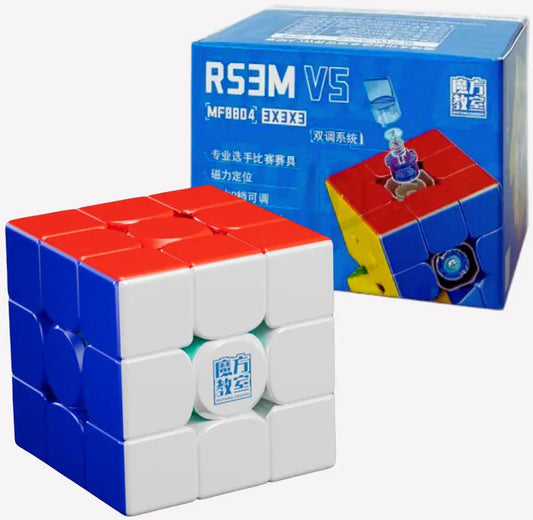
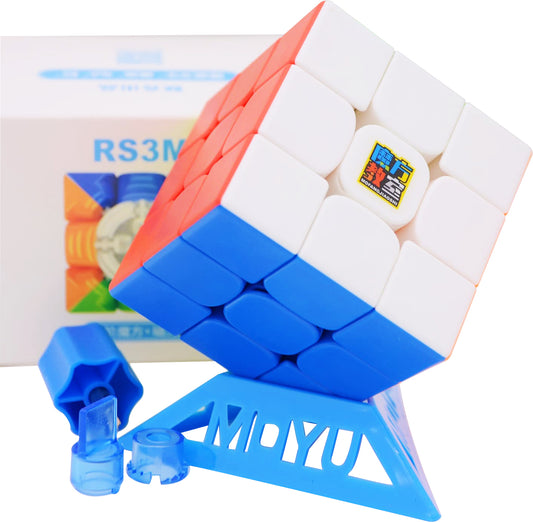
- MoYu RS3M Series
- QiYi Warrior Series
- YJ YuLong Series
These cubes provide excellent performance without a high price tag.
Tips to Learn Faster
Practice Daily
Just 15 minutes per day can produce significant improvement.
Learn One Step at a Time
Don't try to memorize everything in one session.
Watch Your Hand Movements
Efficient finger tricks improve solving speed.
Be Patient
Even world champions started as beginners.
Frequently Asked Questions
How long does it take to learn a Rubik's Cube?
Most beginners can learn the basics within a few days and solve consistently within one to two weeks.
Is Rubik's Cube good for brain development?
Yes. It improves memory, concentration, problem-solving skills, and spatial awareness.
Which cube should beginners buy?
A beginner-friendly magnetic speed cube is usually the best choice because it turns smoothly and is easier to control.
Can children learn Rubik's Cube?
Absolutely. Many children start learning between the ages of 6 and 10.
Final Thoughts
Learning how to solve a Rubik's Cube may seem challenging at first, but by breaking the puzzle into small steps, anyone can master it. With regular practice and the right cube, you'll soon be solving the puzzle confidently and even exploring advanced speedcubing techniques.
Whether you're solving for fun, education, or competition, cubing is a rewarding hobby that develops valuable skills while keeping your mind active.
Ready to start your cubing journey? Explore premium speed cubes, puzzle cubes, and cubing accessories at Cuberkart, India's destination for cube enthusiasts.


